Rail
The only PADS approved earthing products and conductive concrete
Take a look at this slide show to learn more
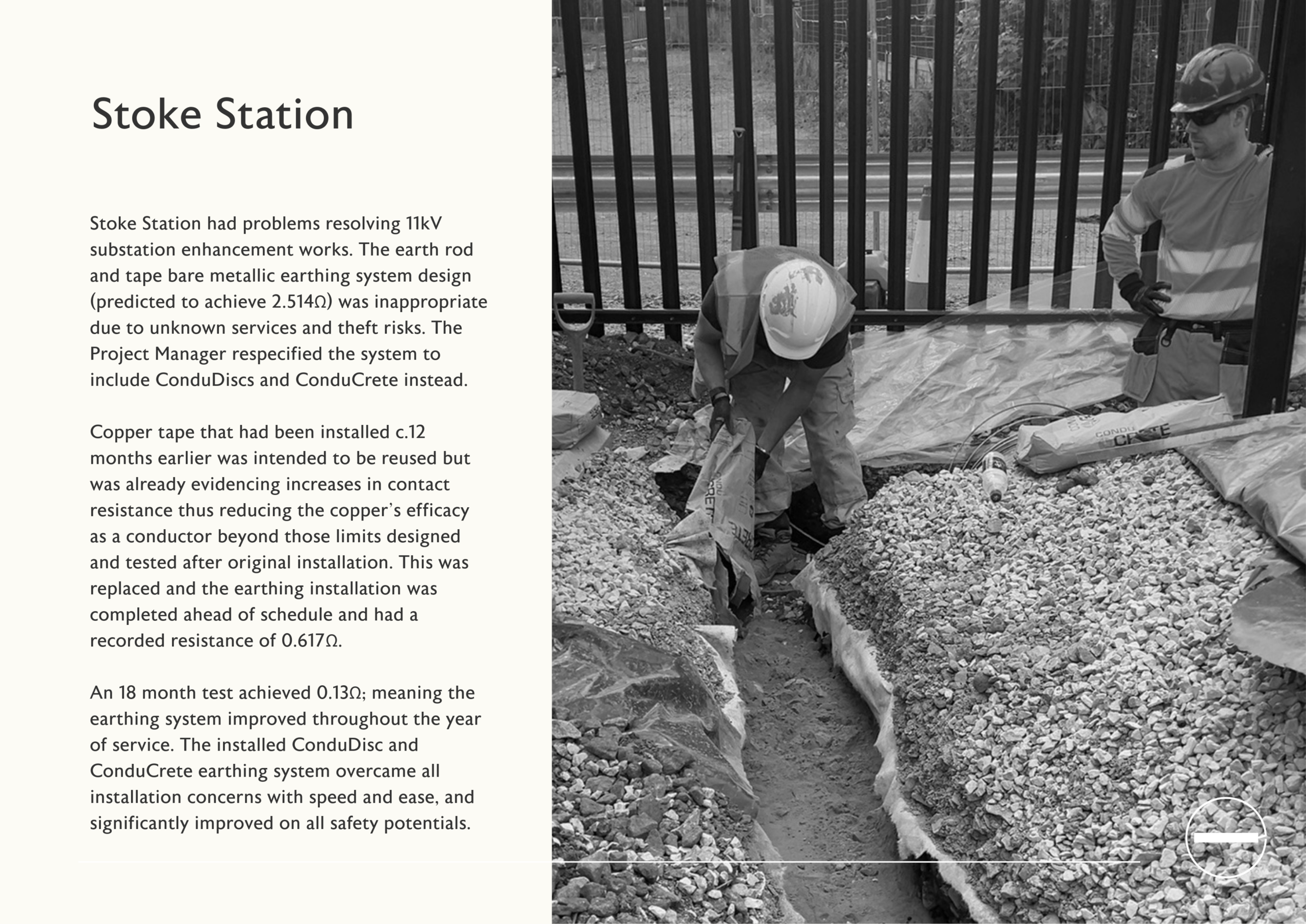
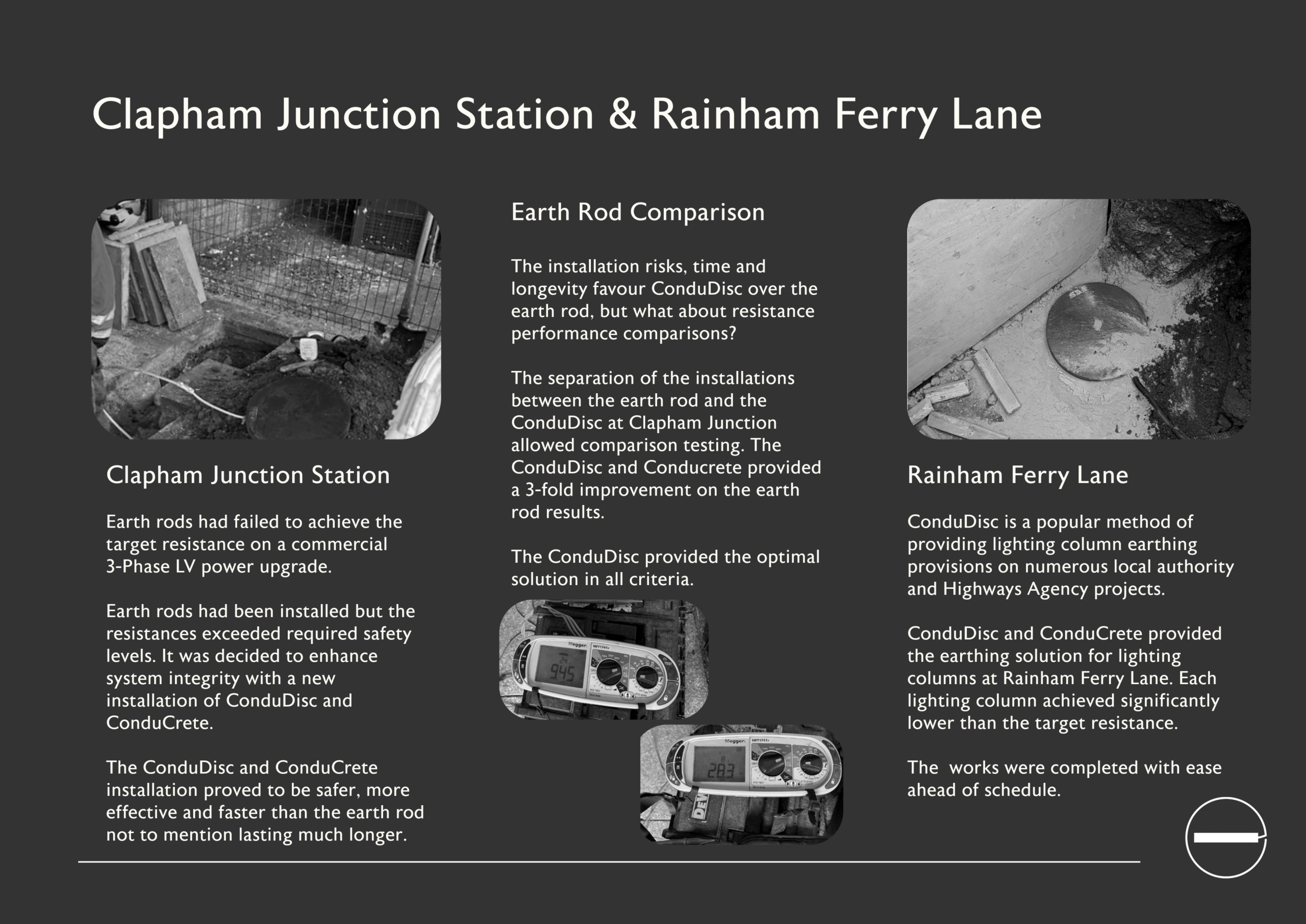
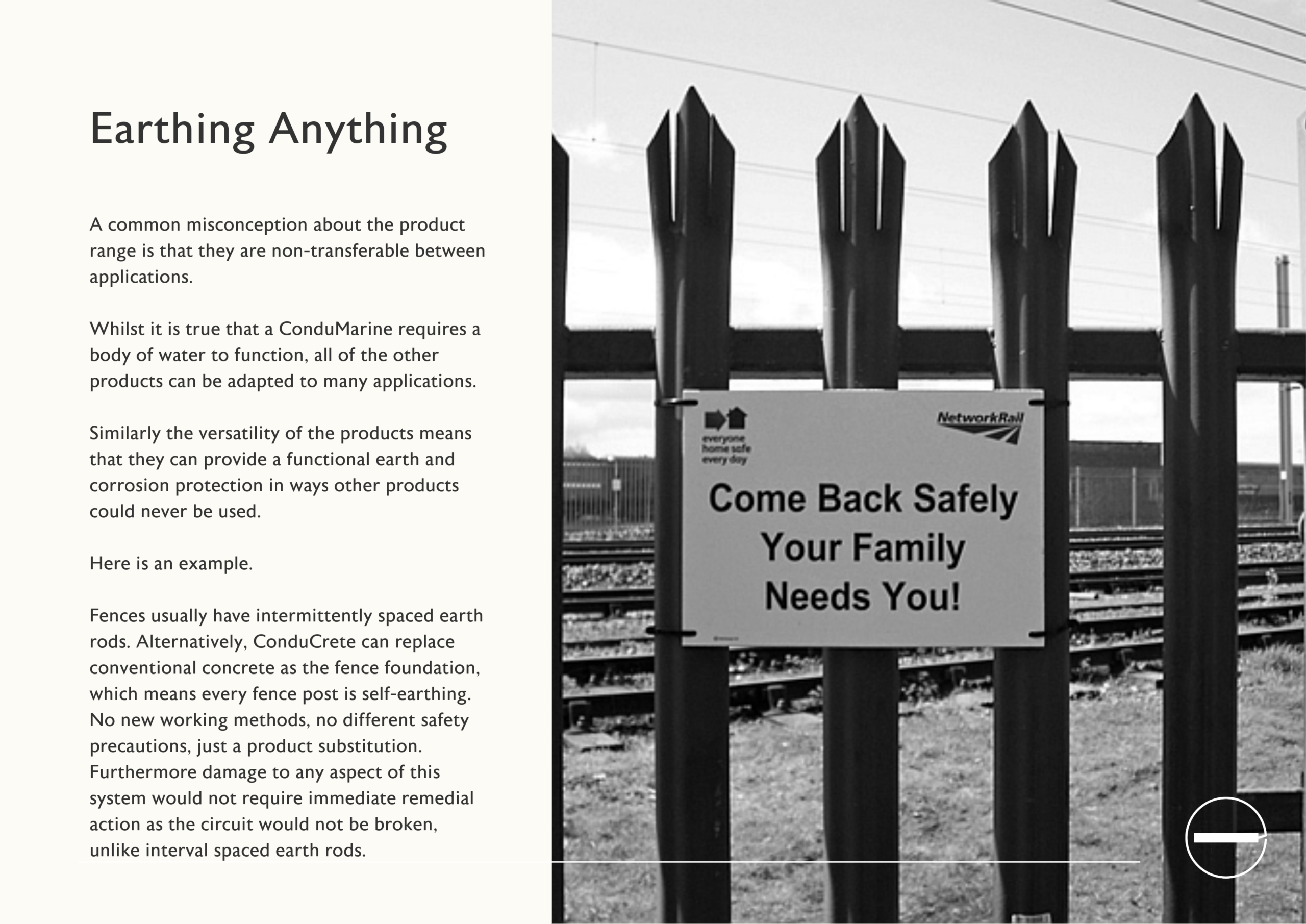
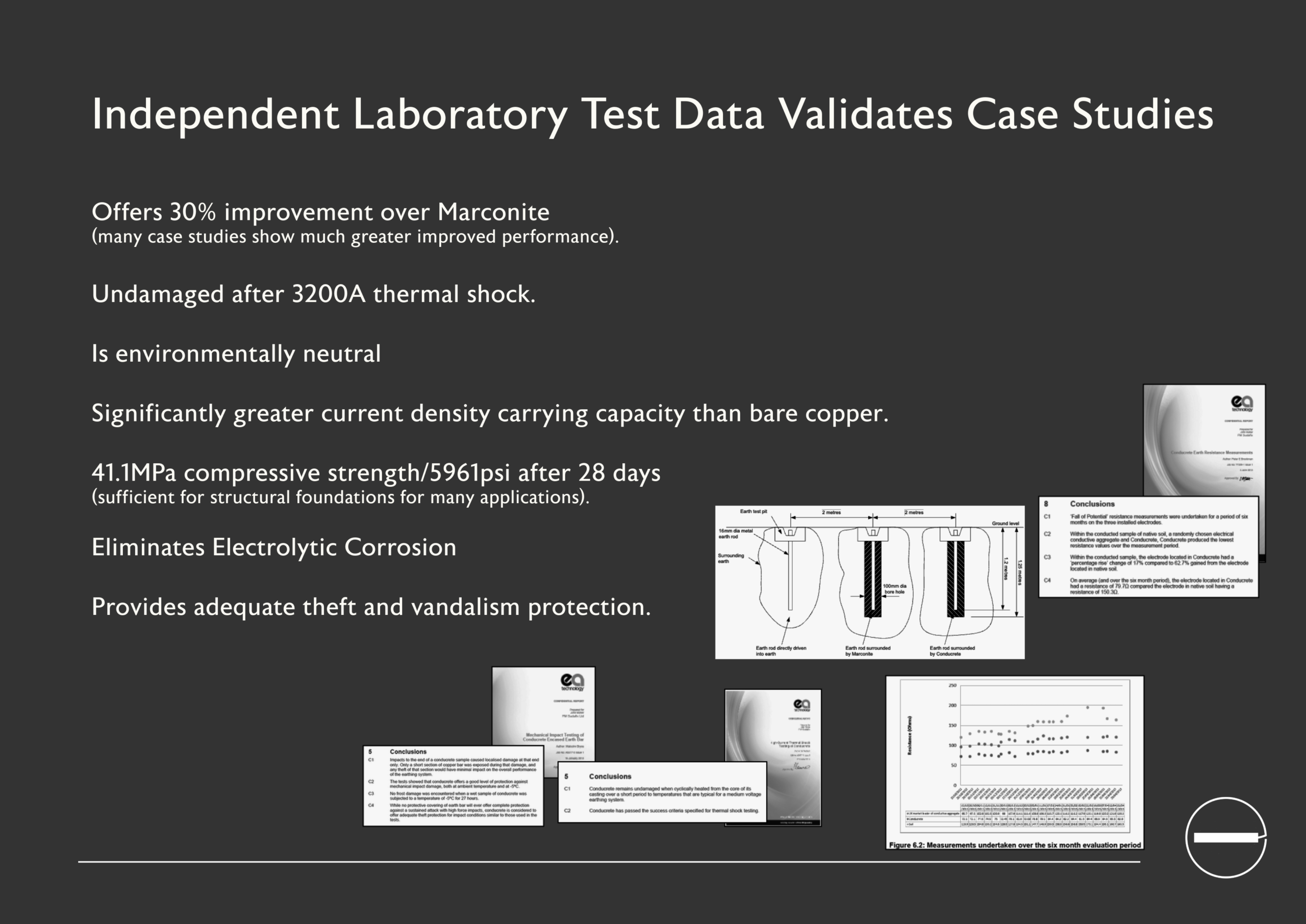

In nearly any country it is reasonable to contend that rail networks provide the most critical transportation method. The risk profile of rail infrastructure is unique when compared to similar infrastructure for a different sector. What might amount to a simple solution for building a substation for domestic power may not be suitable for traction power.
To better serve the rail networks, and the consultants and suppliers that support them Earthing Services has worked diligently to determine the best electrical earthing, lightning protection, stray current management and corrosion protection solutions available.
The good part is, we are only too happy to share them. We want to help other consultants and designers, we prefer collaboration to competition.
Whether you are a contractor, a consultant or even the client, if you want to achieve the fastest, safest, easiest and longest lasting solution (and reduce your own liability in the process) then you have found the right place.
Contact rail sector specialist Ian Hobbs on: +447458 016500 or rail@earthingservices.com
What sort of applications can these products be used on?
Who do we work with?
– Advocacy groups
Core disciplines in rail include:
- Electrical earthing (from Low Voltage to High Voltage)
- Lightning protection
- Stray Current Management
- Corrosion protection
Are the products and methods approved?
Earthing Services operates internationally and approvals are in place in many territories; for those where we have not commenced approvals process that is unlikely to be a problem: we are used to providing the requisite data and case studies to ensure they will be successful. For our domestic market the product-suite is PADS approved by Network Rail.
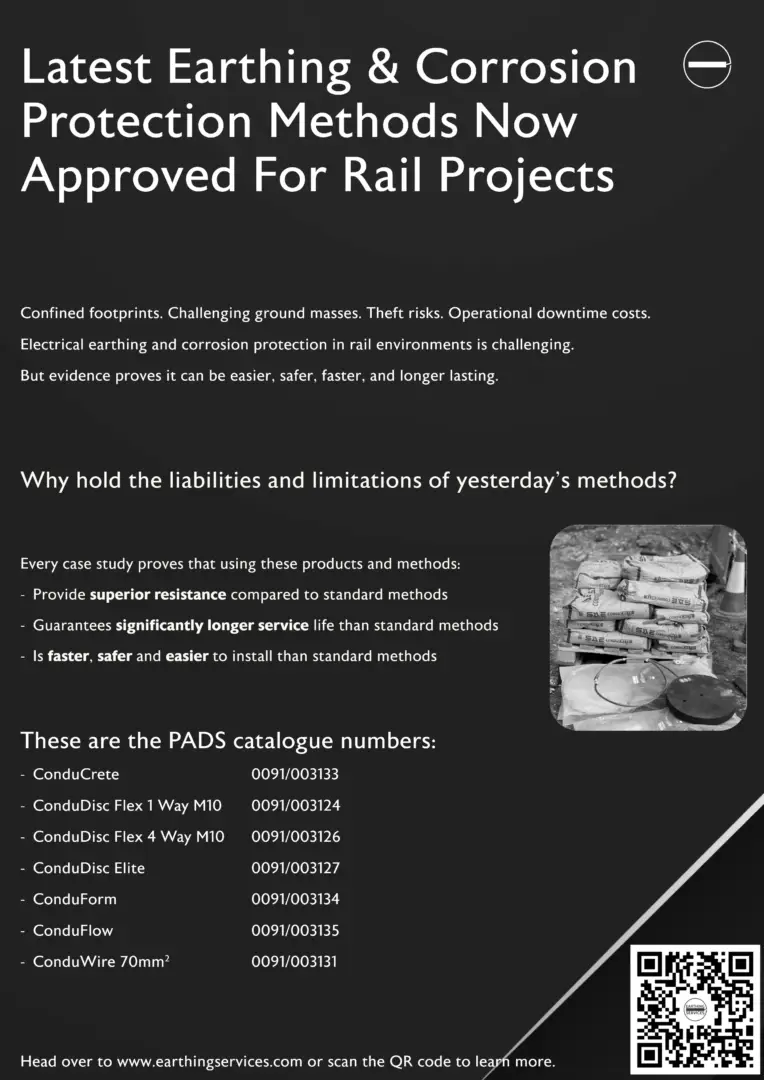
What is Network Rail PADS?
- Safety Assurance: PADS is used in conjunction with the Product Acceptance process to ensure that only approved products are installed on the operational railway, preventing “unacceptable risks” to the infrastructure. If unapproved products are installed on operational railway then this is likely to result in unforeseen and undesirable outcomes of which operational downtime may be the smallest consequence. To specify or install unapproved products it is likely to result in either client-rejection or a significant increase in liability, which underwriters may elect not to insure.
- Controlled Access & Security: PADSnet is a secure, 24/7 online system for managing confidential data. It allows specific users to access the latest versions of documentation, drawings, and technical specifications, ensuring only authorised, updated information is used.
- Procurement Efficiency: The iStore procurement platform (part of the PADS system) makes it easy for Network Rail employees to search, identify, and order authorized components, streamlining the procurement process.
- Reduced Risk in Tendering: By providing accurate data and controlled documentation, PADS significantly reduces risks when tendering for contract applications and during maintenance projects.
- Operational Reliability: It helps ensure that new products are fully developed and meet necessary standards (such as Railway Industry Readiness Levels) before they are deployed, ensuring longevity and reliability.
Note: PADS itself is not the approval process, but it is the database that holds the registration and certificate details of products that have already successfully passed the Network Rail Product Acceptance process. As such engineers and suppliers alike colloquially refer to products that have passed the Network Rail Product acceptance process as “PADS Approved”.
Does PADS apply to earthing or concrete products?
This common misconception was one of the most significant challenges the Condu-Range had when undergoing the Network Rail Product Approval process, as so many engineers and consultants were under the impression that the PADS/Product Approval process did not apply. The Network Rail Technical Authority was absolutely clear on this point at every turn: Yes it did, and was necessary.
The Condu-Range of products was approved after the Technical Authority spent years evaluating its suitability through numerous case studies, test data (both laboratory data and field data), and examining the products themselves.
As it was stated by one prudent member of the Network Rail Technical Authority: “Electrical earthing is the element that keeps people and assets safe, the products are arguably the most critical to get right so no chances should ever be taken.” Three years later that member of the team was proven correct when approval was finally granted.
To specify or install any electrical earthing product that has not been approved is a liability minefield.
What do users say?
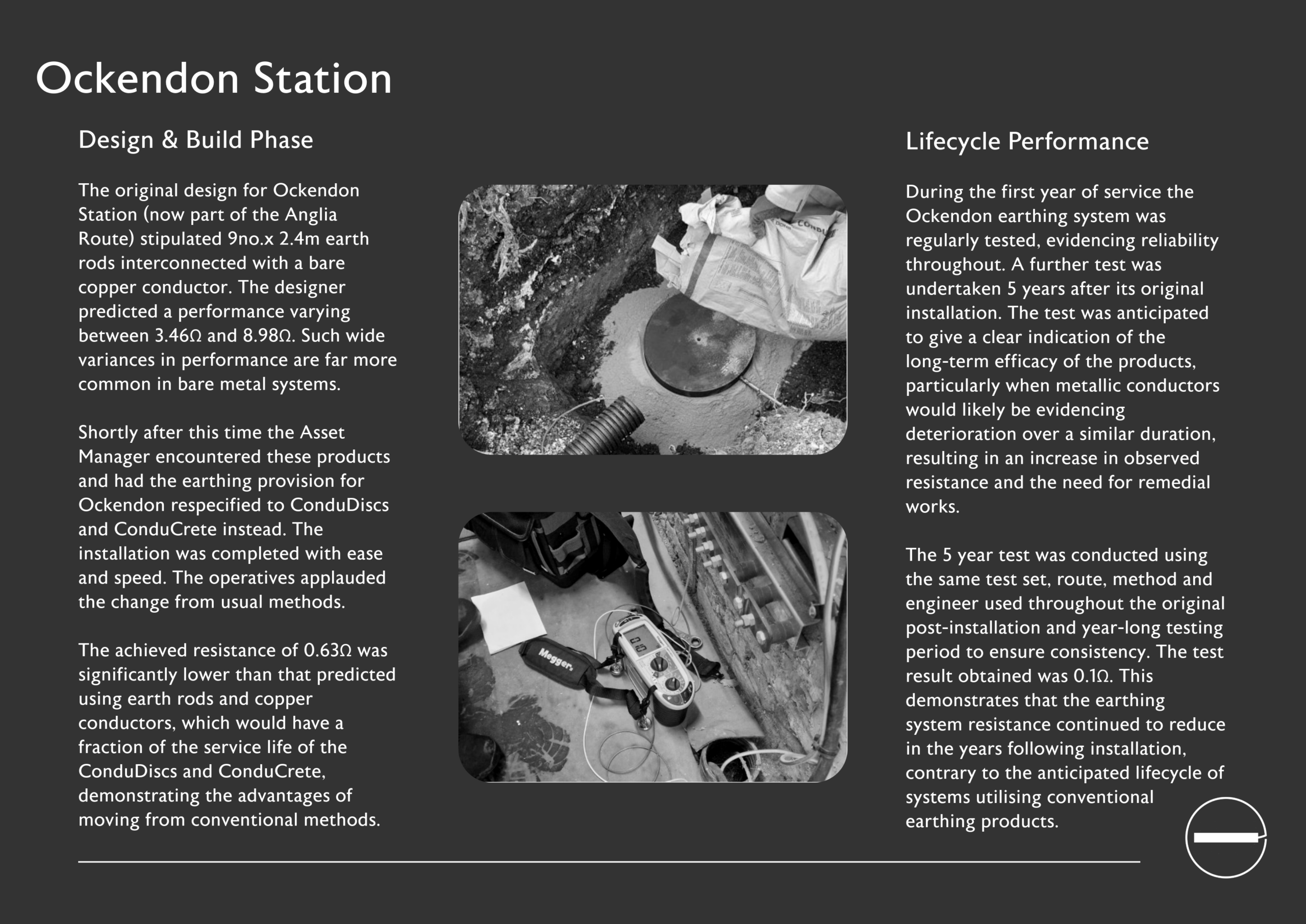
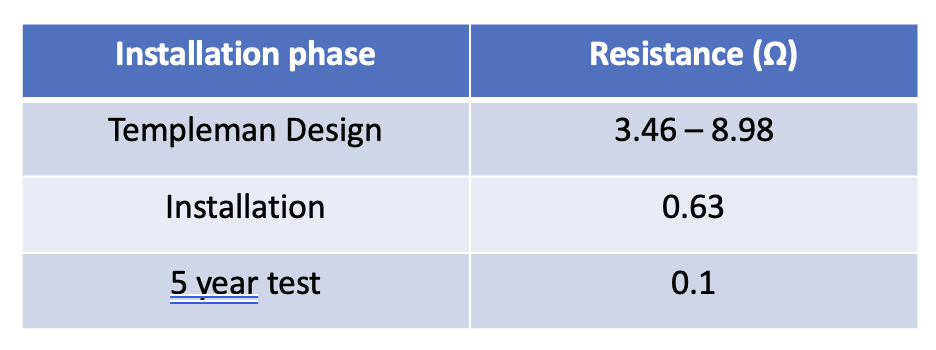
Whilst the Condu-Range had been installed on several light rail systems in the UK Ockendon Station was the first heavy rail installation. The original design for Ockendon Station stipulated 9 x 2.4m earth rods interconnected with bare copper conductor. The designer predicted a performance varying between 3.46Ω and 8.98Ω. Shortly after this time the Asset Manager (Paul Meenan) encountered the products discussed in this presentation and had the earthing provision for Ockendon respecified to those instead.
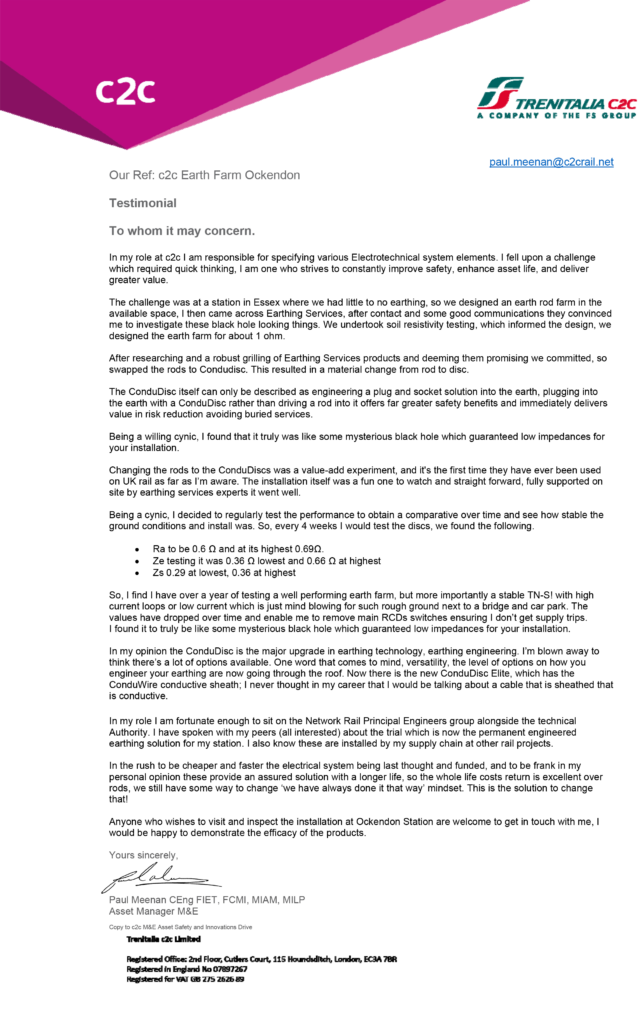
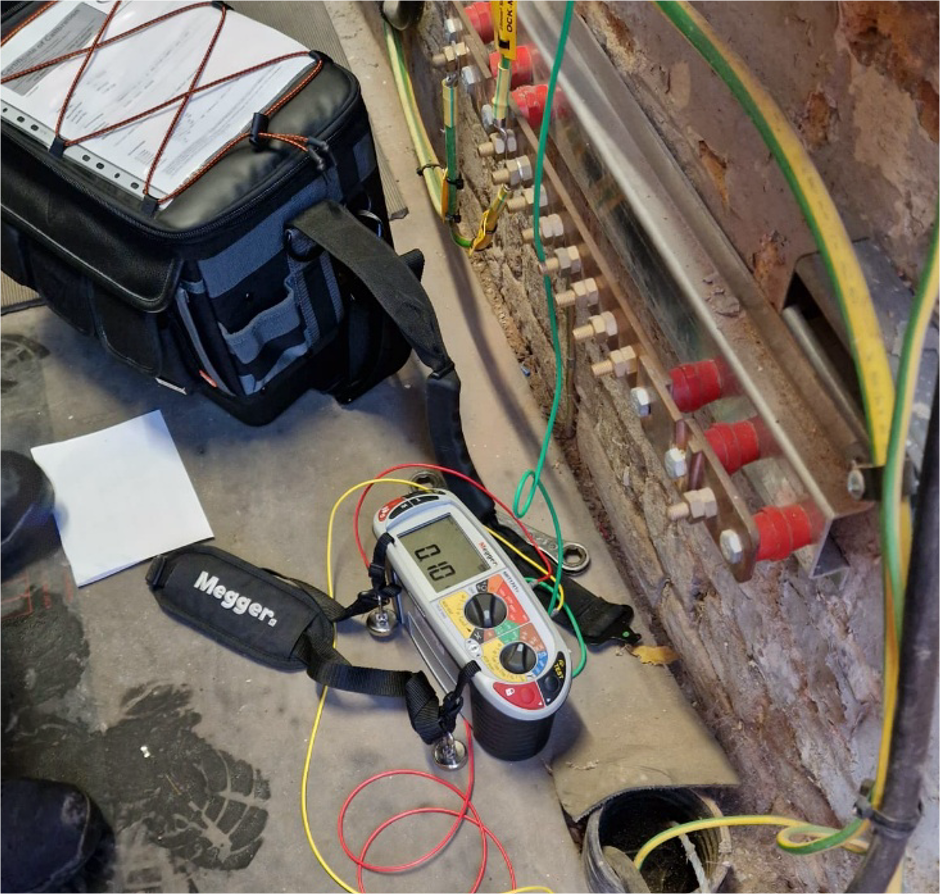
“Changing the rods to the ConduDiscs was a value-add experiment, and it’s the first time they have ever been used on UK rail as far as I’m aware. The installation itself was a fun one to watch and straight forward, fully supported on site by Earthing Services experts it went well. Being a cynic, I decided to regularly test the performance to obtain a comparative over time and see how stable the ground conditions and install was. So, every 4 weeks I would test the discs, we found the following.
So, I find I have over a year of testing a well performing earth farm, but more importantly a stable TN-S! with high current loops or low current which is just mind blowing for such rough ground next to a bridge and car park. The
values have dropped over time and enable me to remove main RCDs switches ensuring I don’t get supply trips. I found it to truly be like some mysterious black hole which guaranteed low impedances for your installation.” – Paul Meenan
The earthing system resistance continued to reduce in the years following installation, contrary to the lifecycle of systems utilising conventional earthing products.
Deterioration / corrosion prevention
Earthing and lightning protection systems: Copper products and their derivatives (copperbond / copper dipped) are the most commonly used products used in electrical earthing and lightning protection systems. Copper is a non-ferrous metal and there is a common misunderstanding that copper will not deteriorate. However, whenever there is an electrical discharge there is electrolytic loss of the conductor. Even if a bare metallic earthing system has been designed perfectly in accordance with governing standards, and then installed perfectly by experienced operatives, then tested to evidence its post-installation sufficiency deterioration is still an unavoidable reality. Ultimately all traditional copper earthing systems fail.
Here we see aging evidence from testing which demonstrates a bare copper plate and one encased in ConduCrete after repeated electrical discharges.
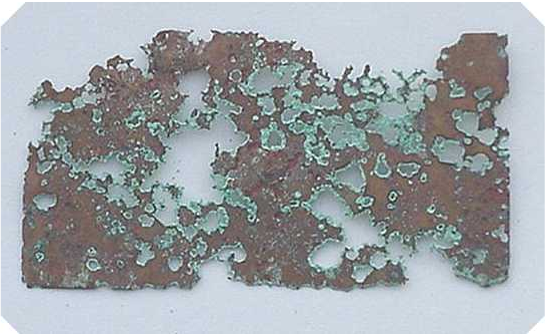
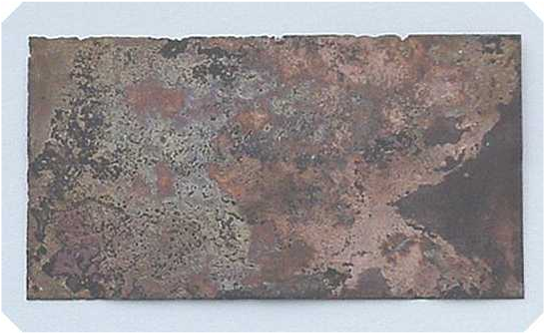
As you can see the bare plate has badly deteriorated. The plate encased in ConduCrete only has damage caused by extracting the plate from the ConduCrete after testing and incidental surface scarring that occurs during the binding process. The rate of electrolytic loss is substantially slower on ConduCrete than it is on bare metal, and is a significantly larger mass resulting in a futureproofed conductor.
If the bare plate had been a lattice then there would be substantially less material present and so deterioration would be an even worse prospect. Any item reliant on the now deteriorated plate would be at risk in the event of a fault that it can no longer manage, as would anyone in the vicinity of it. Remember electrolytic discharges are unavoidable and even adjacent discharges from other systems can badly affect a given system.
This test is not impacted by any hostile ground mass so often encountered in the real world (such as overly acidic, alkalinic or salt influence), which would have made the impact on the bare metal so much worse, although would not have affected the plate encased in ConduCrete.
What about earth rods? In the UK earth rods are forbidden from use on Network Rail sites, however, instances of their use recur. Why? Because earth rods, for many installers, are simply what electrical earthing is. As solid copper earth rods are both expensive and more likely to break or bend most installers use copper bond earth rods, being steel-cored with copper cold-rolled around them or copper-dipped. The combination of steel with copper is logical to benefit from the cheap material cost of steel for the majority of the conductor mass and the improved resistance and non-ferrous performance of copper on the contact surface area.
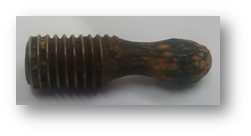
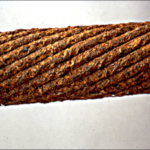
The picture on the left is the remains of a UL Approved copperbond earth rod 3 months following installation. It had been installed in an area of saltwater migration and had been subject to intermittent electrical discharges.
The quality of the earth rod is without question, made to the highest specification and by the world’s most respected earth rod manufacturer. The problem is the technology, a bare metallic conductor undergoing electrolytic loss in a hostile ground environment.
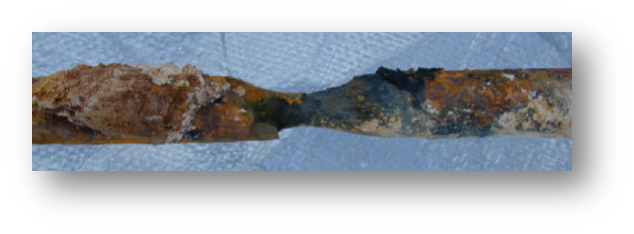
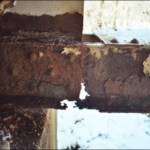
The picture on the right is of an earth rod 10 years following installation. It is demonstrating significant conductor loss. Whenever conductor loss is identified the next thought must always be how differently the remains will now discharge an electrical fault. The disparity of in-life performance of earth rods and other metallic only conductors versus the ConduRange is significant. A system comprising ConduDisc, ConduCrete, ConduForm, ConduWire and the other products in the ConduRange prevent this very issue.
How long does it take for bare metal systems to deteriorate? This is not a simple question to answer because conductor loss is directly linked to directly discharging current, adjacent discharging current and the relative hostility of the ground mass. That being said even in conditions which are not particularly aggressive to bare metallic conductors deterioration of performance, or the early warning signs of pending deterioration can be noted.
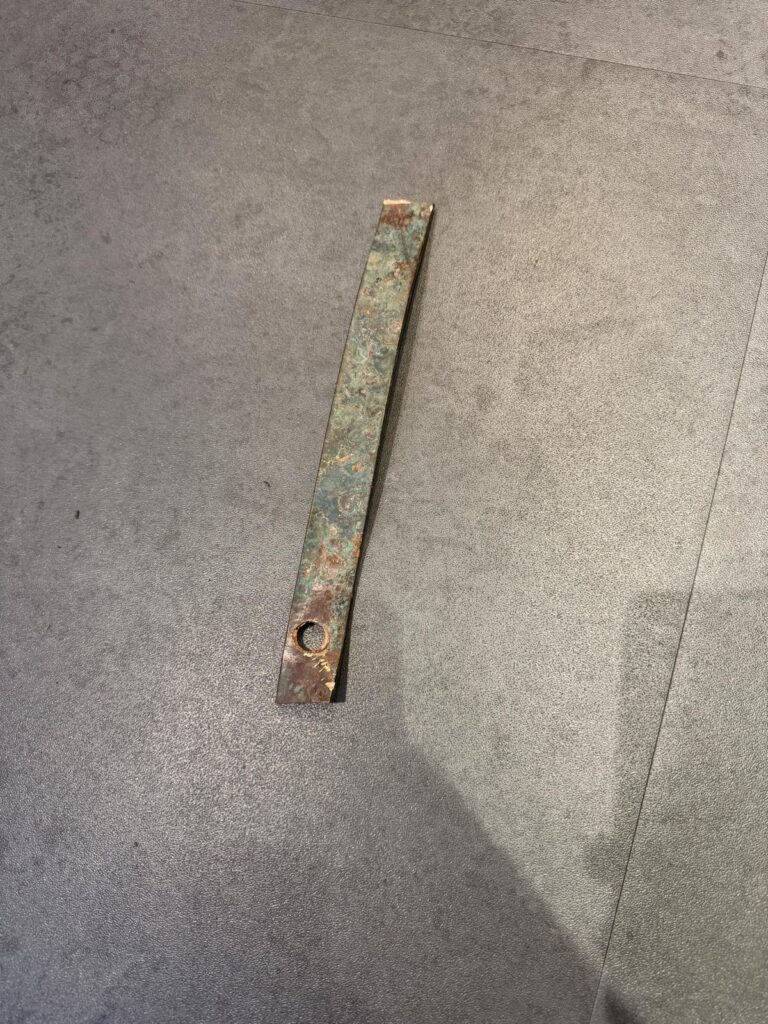
The image on the left demonstrates a short section of bare copper tape that had been installed as part of a substation earthing system 12 months previously. At this stage of its lifecycle there is no notable conductor loss, but what is already evident is the visual signs of an increase in contact resistance.
Copper is highly conductive when it is shiny. Think of the contact points of a household appliance’s plug, they are shiny to make it easy for electricity to pass. If you looked at a plug and noticed that it was dull or worse you would hesitate to put it into the wall, that is because it would be showing an increase in contact resistance, and where there is an increase in contact resistance and electricity is flowing it means heat will generate and also electricity may behave in a way that we do not want it to.
Yet we are accustomed to seeing copper age, its shine diminish and the green patina aggregate. Just because it is familiar does not make it acceptable as a safety measure. Furthermore, the biggest problem with visual clues of increases of contact resistance in electrical earthing systems is that they are buried, and if they are out of sight they are likely to be out of mind.
So even if the conductor has not lost mass, if it has increased in contact resistance then it is highly likely to be performing worse on a safety level than when it was installed, tested and commissioned.
Encase it in the ConduRange, the problem disappears.
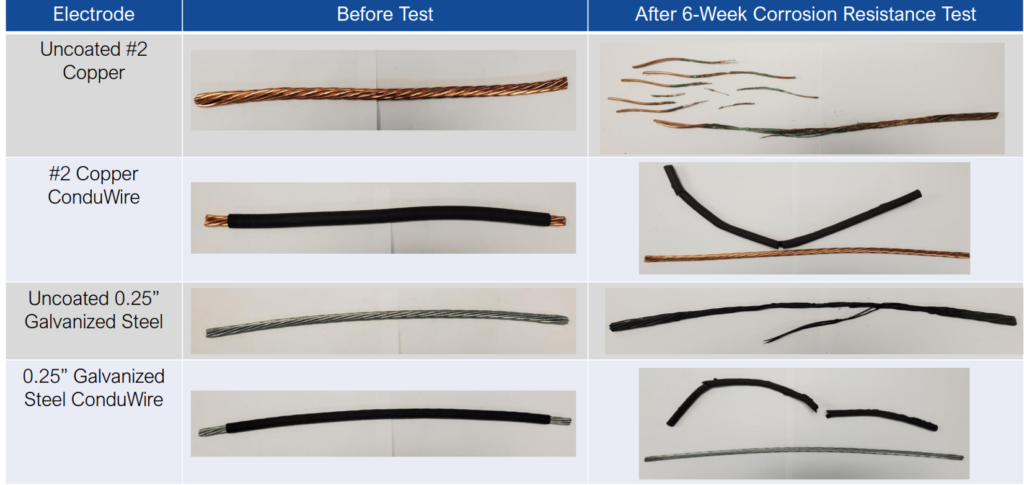
This comparison table demonstrates the significant difference between bare metal and the ConduWire equivalent. The application of the conductive ConduWire jacket over conventional metallic wires provides a dramatic level of protection against corrosion.
Corrosion or metallic deterioration in non-earthing or lightning protection installations: There are far more metallic elements on rail infrastructure than just electrical earthing and lightning protection system components. Direct buried steel, or even concrete embedded steel structures often show signs of corrosion in rail infrastructure. It is often a consequence of stray currents, adjacent AC mitigation systems, or faulty or inefficient earthing systems nearby.
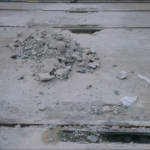
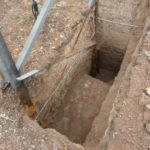
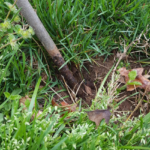
Much like the previous electrical earthing and lightning protection discussion points, the application of the ConduRange provides the ability to mitigate or manage the impacts of metallic corrosion and deterioration.
Theft prevention
Copper theft on UK rail sites is a major issue that costs the industry, taxpayers, and the wider economy hundreds of millions of pounds annually. The theft, primarily targeting signaling and power cables to sell for scrap, causes massive disruption to passenger and freight services, with costs often running into seven figures due to repairs, compensation, and severe delays.
Key Economic and Operational Impacts
- Total Economic Cost: Metal theft, with railways as a primary target, costs the UK economy around £500 million annually.
- Recent Surge (2024-2025): Cable theft incidents on the rail network jumped by 48% in 2024 compared to the previous year. In 2025 alone, 102 incidents of live cable theft caused £5.1 million in damages and over 104,000 minutes of delays.
- Disproportionate Damages: A small amount of stolen copper, fetching perhaps a few hundred pounds for criminals, often causes tens or hundreds of thousands of pounds in damages and disruption. For example, a theft in early 2025 costing £100,000 was linked to stolen cables for overhead power lines.
- Impact on Services: The 108 incidents in 2024 alone resulted in over 69,275 minutes of train delays, with 2025 seeing an even higher volume of disruption, particularly in the London and South East regions.
Drivers of theft and mitigation
- High Copper Prices: Rising copper prices, which hit records in 2026, drive the thefts, with organised criminal groups using sophisticated methods to target infrastructure.
- Infrastructure Danger: Thieves risk their lives stealing from live, high-voltage lines, which also poses a safety risk to the public and railway staff.
- Countermeasures: Network Rail is responding by installing hard-to-cut cables, using forensic marking agents, drones, and increasing security patrols to detect and trace stolen material.
So how can we help?
Earthing Services is committed to playing its part to help prevent theft and vandalism on railways. There are various strategies for this such as:
- Reduce metallic elements: Most designers of electrical earthing systems seek to achieve a target resistance along with other safety potentials using copper/metallic elements only. This frequently results in excessive expenditure on a product set that fluctuates wildly based on commodity markets and also incentivise thieves to continue to target electrical safety systems. If the Condu-Range is deployed then it reduces the quantity of metallic elements required to achieve safety.
- Protection: Once the copper elements are reduced as far as practicable our approach is to then encase them in a protective medium from which it is incredibly difficult to remove. This means that even persistent and determined thieves will find their efforts so poorly rewarded that it will disincentivise any return if the Condu-Range is deployed. Using ConduForm to encase exposed lightning protection down conductors is a popular concept. Even metallic elements which are not for earthing or lightning protection purposes can be protected by the range, such as encasing cable ducts in ConduForm to ensure that cables can be replaced at the end of their lifespan, but protected from thieves during their service life.
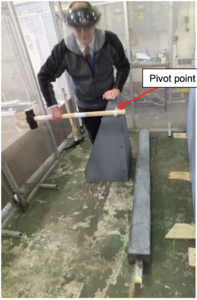
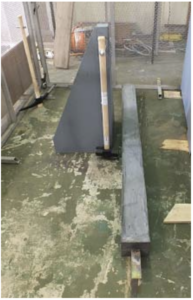
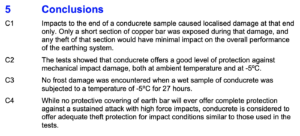
The following images were taken from an independent laboratory impact test report on ConduCrete for the purposes of determining how viable it would be for theft prevention of electrical earthing systems. The conclusions from that report are reproduced beneath the images.
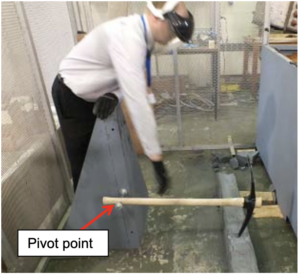
Conclusions of EA Technology ConduCrete Impact Testing Report
C1 – Impacts to the end of a conducrete sample caused localised damage at that end only. Only a short section of copper bar was exposed during that damage, and any theft of that section would have minimal impact on the overall performance of the earthing system.
C2 – The tests showed that conducrete offers a good level of protection against mechanical impact damage, both at ambient temperature and at -5ºC.
C3 – No frost damage was encountered when a wet sample of conducrete was subjected to a temperature of -5ºC for 27 hours.
C4 – While no protective covering of earth bar will ever offer complete protection against a sustained attack with high force impacts, ConduCrete is considered to offer adequate theft protection for impact conditions similar to those used in the tests.
How is using the ConduDisc and ConduCrete faster and easier?
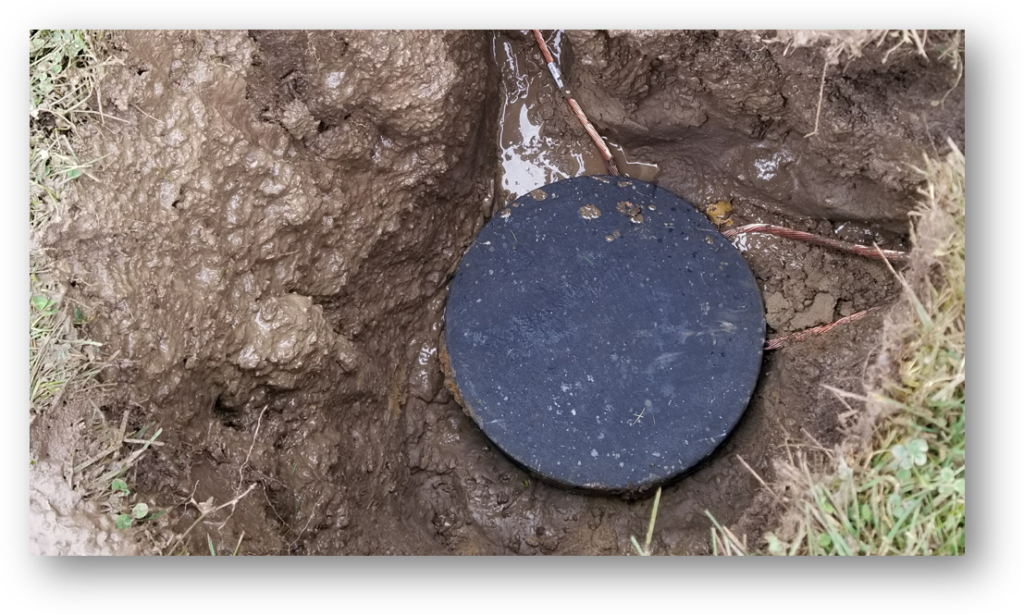
Every product in the ConduRange is designed with a focus on the installation experience; if a product does not represent the safest, fastest and easiest solution available then it goes back to the drawing board. If something is not easier than a conventional method then it is unlikely to be faster, get one right and the other usually takes care of itself.
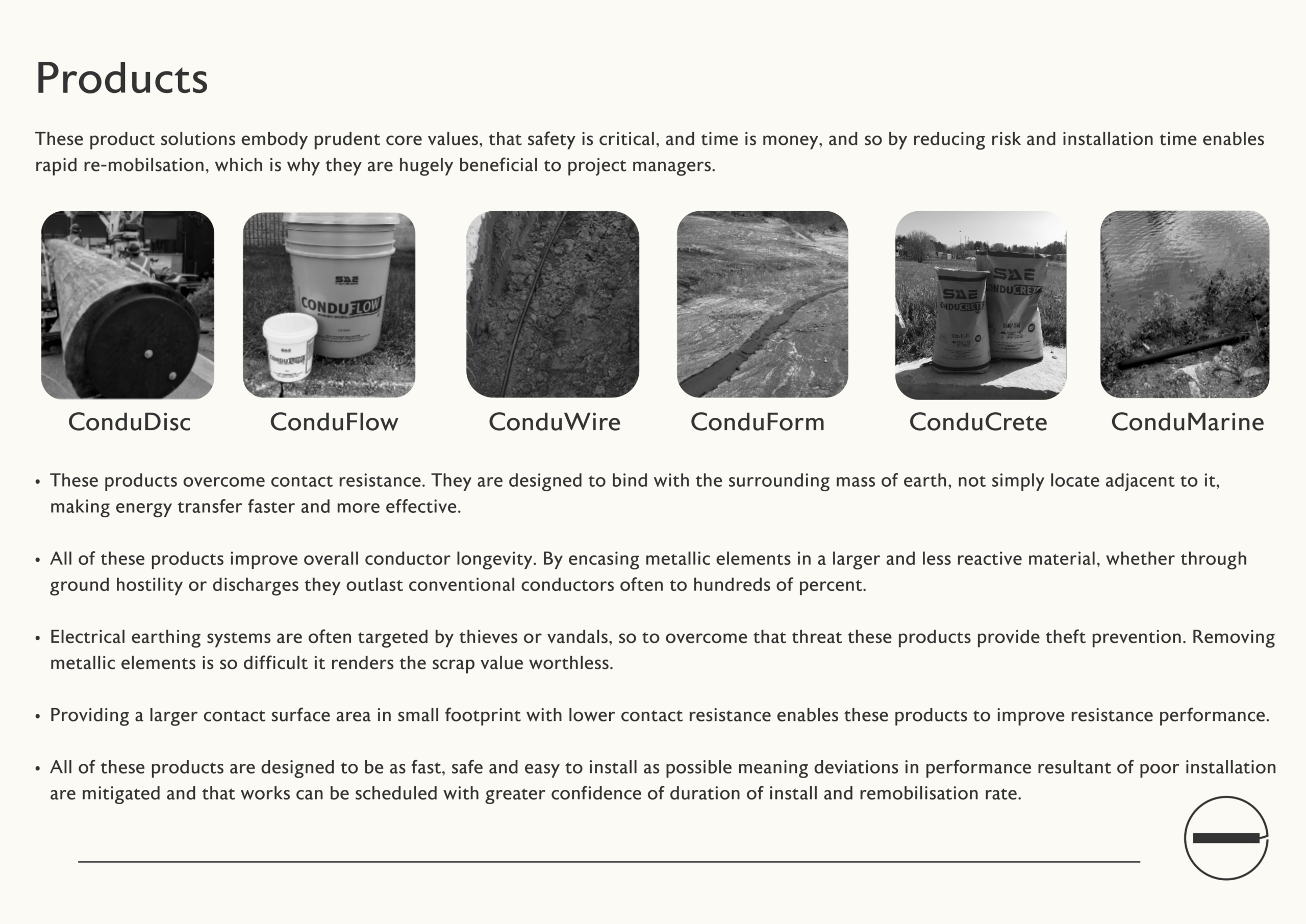
The ConduDisc is as difficult as dropping a stone in a hole. If a ConduDisc Flex is being used then it is as complicated as dropping a stone in a hole, unscrewing a bolt, attaching a lugged conductor/drilled conductor and screwing it back on. It takes seconds.
With ConduCrete in nearly every application it is as difficult as opening a bag and emptying it.
Take ConduForm, it’s like putty and applied by hand: a child making a mudpie is probably doing more sophisticated stuff.
ConduFlow is like emptying a bucket.
ConduMarine is pushing a block into water.
This is really basic stuff. That’s why it’s great. We do the big thinking upfront so engineers do not have to. Let’s be clear, if it’s cold and wet, or dry and hot then spending as little time as possible has got to be a good idea.
Whenever a time and motion comparison is done these solutions come out on top, and that takes us back to the beginning – if they were not the best solution then they would still be in development!
How does a ConduDisc compare to an earth rod?
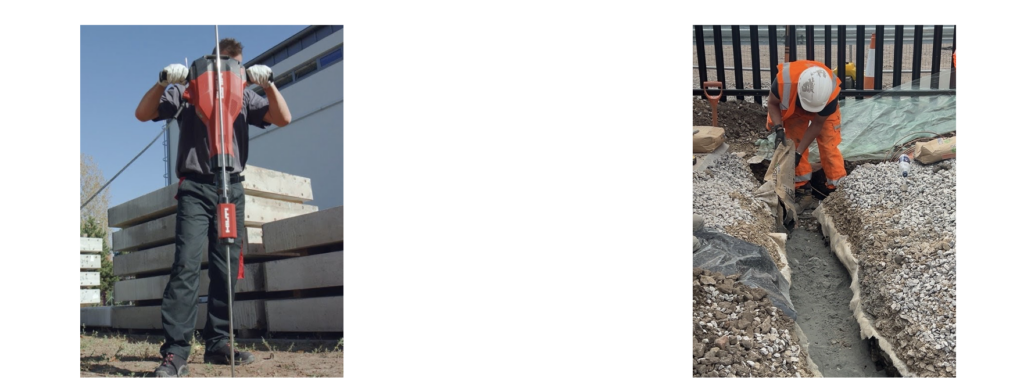
This is one of the most commonly asked questions asked about the ConduDisc. Depending on how you evaluate them there are a few different answers:
Longevity: As demonstrated on this page earth rods have a reasonably limited service life. Of course if an earth rod is installed in a moist clay environment, never withstands any direct, indirect or adjacent faults then it may last a long time and perform reasonably well throughout that time. However, in nearly any real-world application it will be subject to electrolytic deterioration of some sort; we simply have such a dense electrical environment that discharges are almost inevitable. Compare that to the ConduDisc and it significantly outperforms an earth rod, usually to hundreds of percent.
Resistance: Chasing the R-Value is a common experience for contractors installing electrical earthing without an appropriate design in place. There is no shame in that, the majority of small-scale earthing provisions are installed in this manner. When it comes to larger earthing systems, or earthing systems where threat to life in the event of fault is high then a designed earthing system is necessary. Earth rods have the benefit of being able to penetrate deeper layers of ground mass, but can often pass through optimal layers of ground resistivity to poorer conducting layers. ConduDisc have the benefit of not doing that, so if you know the local ground profile or have checked with our technical team, then you have a very good idea of how the ConduDisc will perform at a given depth. Some of the following case studies below demonstrate this further.
Ease of installation: Earth rods are usually installed by driving them into the ground using either sledgehammers or breaker-type hydraulic devices. The ConduDisc is extraordinarily easy to install: if you can drop a stone in a hole then you can install a ConduDisc.
Speed of installation: Once at conductor location depth an earth rod installation will be relative to the present moisture and ground mass type and then method of installation/tools used. Alternatively, once at depth ConduDisc takes seconds.
Purchase cost: Earth rods can fluctuate in price as they comprise metals influenced by international commodity markets. That being said they remain a relatively cheap option. The ConduDisc is more expensive to buy per unit, but much like buying a car and then insuring or fuelling/charging it, the purchase cost is not the whole cost profile.
Installed cost: As the ConduDisc takes a fraction of time to install of an earth rod and does not require specialist tools the ConduDisc offers the lowest installed cost compared to an earth rod.
In service-life cost: As established, bare metal products like earth rods deteriorate and require maintenance and replacement. The failure of earth rod or bare metal systems introduce the additional costs of an increase in liability, potential for operational downtime and threats to life and assets. As for ConduDisc… unless there’s an interconnected fault leading to a fuse downstream then it will continue to function for many, many, years to come so easily a superior in-life cost.
A few site examples: These show a couple of side by side examples comparing earth rods and ConduDisc installations
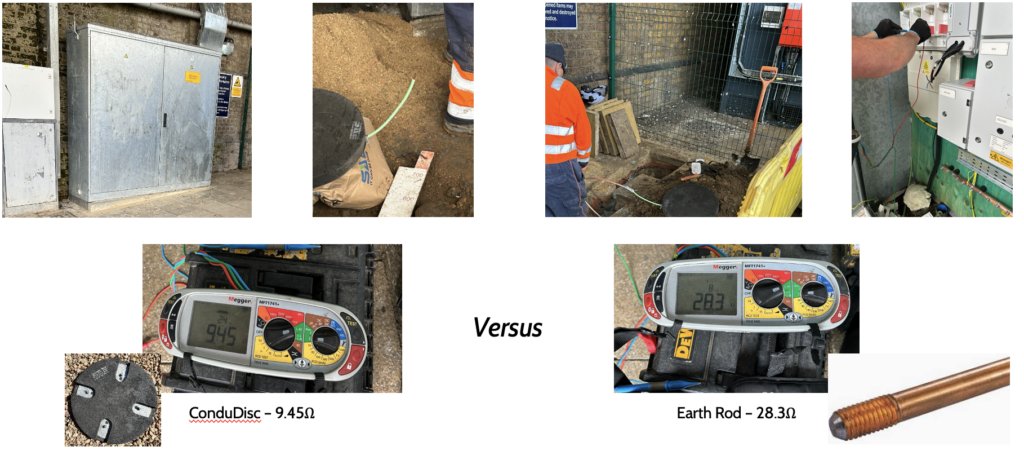
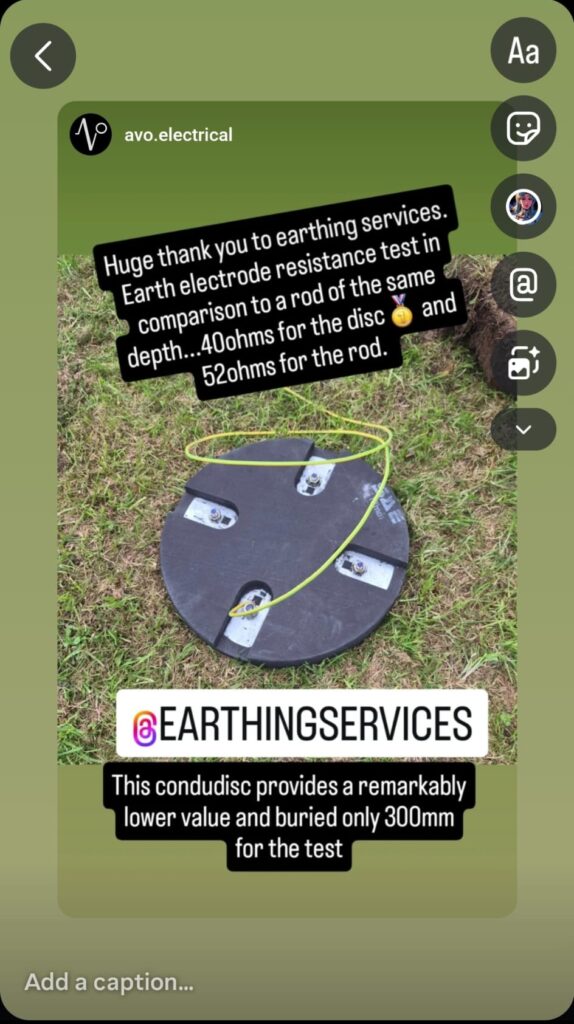
Enthusiastic engineers often post images and testimonies on social media evidencing and expressing the successes of their ConduDisc installations. This example is also helpful as it demonstrates a side by side case study comparing the respective results.
One of the benefits of a ConduDisc is that it has the contact surface area of a 3m earth rod, without the need to vertically penetrate that sort of depth.